Tenterhooks
by Mark Brislin | Sep 19, 2022 | Allgemein, Britisches Englisch / Amerikanisches Englisch Wortschatz, Falsche Freunde Tipp der Woche, Geschäftsenglisch, Rechtsenglisch, Satz des Tages, Spezieller Grammatik Tipp der Woche, Umgangssprache, Wort des Tages, Wortschatz für Verträge und Verhandlungen
“On tenterhooks” means waiting nervously for something to happen. The word ‘tenter‘ means “a frame used for drying and stretching cloth” and is related to tent, so being “on tenterhooks” compares the tenseness of the stretched fabric to the tension of nervous waiting.
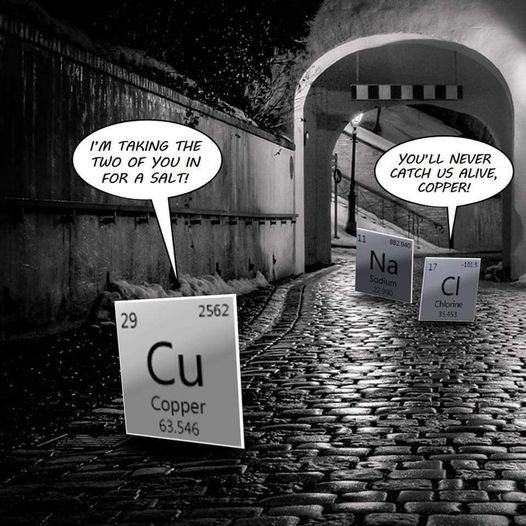
NOTE: I would not say that I’m ‘IN TO‘ Chemistry, but I do know that in the Periodic Table of Elements that CU means Copper (Kupfer) and that putting together Na (Sodium) and Cl (Chlorine) makes Salt. Now you need to know some street language / Colloquialisms to understand this joke. Also, did you know that if you had too much of either Na or Cl it could kill you, but put them together and if you do not get enough Salt, you will die….
E.G., to assault someone verbally or physically.
NOTE: Business English, etc.
can be found below the translation exercises.
Translate the Text: Übersetzen:
Susann, Andreas, Nadine, Heike, Simone and Reiner.
Die Gruppe liest.
Die Gruppe lernt.
Der Freund lernt.
Die Damen sind Willkommen.
Wir sind keine Fans.
Er hat keine Freundin.
Ist sie deine Freundin?
Sie haben viele Fans.
Willkommen meine Damen. (NOT said with MY in English)
Mein Mann ist ein Türke. Mein Mann ist Türke.
Mein Freund, der Bär.
Der Freund mag nichts.
Ja, ich habe einen Freund.
Sind ihre Freunde Frauen?
Dein Nachbar ist laut.
Eure Freundin schreibt.
Hast du eine Freundin?
Leute kommen, Leute gehen.
Meine Freunde sind alt.
Die Person läuft.
Nein, wir haben keine Babys.
Die Menschen.
Der Herr isst einen Apfel.
Die Katzen sehen die Person.
Die Menschen lesen Bücher.
Hast du ein Baby?
Nein, ich bin kein Türke.
Die Katze mag die Freundin.
Hallo, Freundin.
********************************************************
Business English Word of the Week:
Geschäftsenglisch Wort der Woche:
“A Point of Negotiation”
Any clause or part of a contract that’s open for discussion and negotiation.
Sample Sentence:
“Always remember that your salary is a valid point of negotiation to address at your yearly review.”
Law English Word of the Week:
Gesetz Englisches Wort der Woche:
To “File a lawsuit”
To file a lawsuit means to sue a party to the contract and bring them to a court of law. Lawsuits may be filed against a company for many reasons, including breach of contract or if a worker has been injured because the company failed to ensure safety standards.
Sample Sentence:
“We could file a lawsuit against the factory for poor ventilation, but it might take months, even years, before the case goes before a court.”
Vocabulary for Contracts:
Wortschatz für Verträge:
“Fail to comply“
To not fulfil the terms of a contract. Failure to comply with a contract could result in penalties, legal action and even time in prison.
Sample Sentence:
“If they fail to comply with the contract one more time, we’ll have to take legal action.”
Vocabulary for Negotiations:
Wortschatz für Verhandlungen:
alternatives, which means: to have other options.
Sample Sentence:
“We can’t offer you the contract you requested, but let’s discuss some other alternatives.“
**************************************************************
Word of the day: Wort des Tages:
Lehrgang – to go on a course.
Sample Sentence:
“I will be going on a course next week for a few days.”
NOTE: Germans often say they are doing “a further” training or “a training” = x. This is bad English. You should say, “I will be going on a course.” “I’m going to be further trained.”
Phrase of the day: Satz des Tages:
“I need to consider your suggestion/proposal.”
Sample Sentence:
“Now that you have given all the information that I require, I can go away and consider (prüfen) all my options regarding your business proposal.“
Idiom of the day: Redewendung des Tages:
To have ants in your pants – means you can’t sit still. (German = Hummeln im Hintern).
Sample Sentence:
“Oi, Rodney, stop moving about so much! You’ve got ants in your pants!“
British English (B.E.) / American English (A.E.) Vocabulary:
Britisches Englisch / Amerikanisches Englisch Wortschatz:
British English (B.E.) = First-year Graduate
(or an Undergraduate)
American English (A.E.) = Freshmen
(at University). Frischling.
Sample Sentences:
“I’ve just started my first year at the University of Hertfordshire, so I’m called a First-year Graduate (an Undergraduate).” B. E.
“I’m a Freshman at MIT. (at University).” A. E.
Special Grammar tip of the week:
Spezieller Grammatik-Tipp der Woche:
Never use a double-negative
In English, there are often two ways to express a negative concept. For example, if you want to say the room is empty, you can say:
“There is nothing in the room.” OR “There isn’t anything in the room.”
The words ‘nothing’ and ‘anything’ have the same meaning, but ‘nothing’ is used with an affirmative verb, and ‘anything’ is used with a negative verb.
This rule applies to other words like:
nobody – anybody
none – any
This is also true of the word ‘never’ when you talk about the experience. One can say:
“They have never been to South Africa.” OR “They haven’t ever been to South Africa.”
The meaning is the same, but in the second sentence, the use of ‘ever’ means you need to make the verb negative.
Pronunciation tip: Aussprachetipp:
“Which witch is which?“
Try and say this quickly X 10.
Versuchen Sie, diesen Satz zehnmal schnell und fehlerfrei zu sagen.
False Friends Tip of the Week:
Falsche Freunde Tipp der Woche:
German Translation False Friend (F.F.) Meaning of F.F.
Bord (Regal) shelf board Tafel
Wit, Wit, Wit Business examples:
Witz, Witz, Witz Geschäftsbeispiele:
“This is far and away the finest depression we have ever had.”
Quote by Henry Ford.
Slang word of the day:
Slangwort des Tages:
To Lollop about means moving unsteadily or with difficulty; (of a person or especially a large animal) to move in an awkward, rolling way: to blunder; to proceed with a bounding or bobbing motion.
Sample Sentence:
“The dogs lolloped along the beach with each other.”
Colloquial / Colloquialisms:
Umgangssprache / Umgangssprache:
“All right?”
This is commonly used as a greeting that doesn’t always need a response. For example, you say this as you may pass someone in the street or an office corridor and you just say, “All right?” and keep walking.
Sample Sentence:
“All right Chas? What’s it like finally being King?”
NOTE: (Chas is the short form for Charles, American = Chuck.) In English, “To Chuck” means ‘to throw‘.
NOTE: To finish with your girlfriend/boyfriend = Colloquial = “to be chucked.”
Cockney rhyming slang: Cockney Reimender Slang:
“Taters (potatoes) in the mould” means it is “Cold”.
The short version is ‘Taters‘.
Sample Sentence:
“Man! Stone the Crows, it’s really taters today!“
Quote of the week: Zitat der Woche:
“It ain’t what they call you, it’s what you answer to.“
W. C. Fields.
Fortgeschrittene, Anfänger, Geschäftsenglisch, Firmenkurse, Gruppenunterricht, In-house Englisch, Sprachschule Englisch, Telefonkonferenz Englisch persönlich oder per Videokonferenz; in Dresden, Chemnitz, Brand-Erbisdorf, Freiberg, Halsbrücke, Lichtenberg, Meißen, Döbeln, Riesa und überall in Sachsen seit über 20 Jahren!
Delivering professional Business English teaching in person or via video conferencing in Dresden, Chemnitz, Meißen, Brand-Erbisdorf, Lichtenberg, Freiberg, Döbeln, Riesa, Halsbrücke, and all over the state of Sachsen for over 20 years!

Recent Comments