If push comes to shove
by Mark Brislin | Nov 1, 2023 | 2023, Allgemein, Britisches Englisch / Amerikanisches Englisch Wortschatz, Falsche Freunde Tipp der Woche, Geschäftsenglisch, Rechtsenglisch, Satz des Tages, Spezieller Grammatik Tipp der Woche, Umgangssprache, Wort des Tages, Wortschatz für Verträge und Verhandlungen
Meaning: when one must commit oneself to an action or decision.
“When push came to shove, we will always stand up for liberty and freedom of our children.“
The literal meaning of “when push comes to shove” is when a situation escalates from a polite or tentative action to a more forceful or decisive one, often involving a physical push (ein körperlicher Stoß) turning into a shove (ein Stoß). It essentially means “when a problem becomes serious and requires action.”

NOTE: Business English, etc.
can be found below the translation exercises.
Translate the Text: Übersetzen:
Susann, Nadin, Reiner, Heike, Simone and Andreas.
Die Banane.
Ich brauche vier Bananen.
Einladen
Ich möchte für meine Freunde einen Apfelkuchen backen.
Meine Eltern mögen Wein, aber kein Bier.
Kannst du Bananen für meine Haustiere kaufen?
Ich will Schnitzel für deine Großeltern machen.
Meine Großeltern mögen keine Orangen.
Ich will dich zum Frühstück einladen. Kommst du?
Oh nein, die Banane ist schon braun!
Warum brauchst du für die Pizza eine Orange?
Ich habe nur eine Banane zu Hause und sie ist braun.
Willst du deine Eltern zum Mittagessen einladen?
************************************************************
Business English Word of the Week:
Geschäftsenglisch Wort der Woche:
Salary – Gehalt.
Law English Word of the Week:
Gesetz englisches Wort der Woche:
Libellous (this is the other use of the word)
What is considered libellous?
defying or resisting some established authority, government, or tradition; insubordinate; inclined to rebel. Pertaining to or characteristic of rebels or rebellion.
Sample Sentence:
“The national newspaper published a libellous story concerning the Prime Minister.”
Vocabulary for Contracts:
Wortschatz für Verträge:
Fixed Penalty – Strafe behoben – Festgesetzte Strafe.
Vocabulary for Negotiations:
Wortschatz für Verhandlungen:
A loaded question – eine schwierige Frage.
This is a phrase that means the question is expressed in such a way as to have an agenda behind it. Eine Frage mit mehreren Antworten.
Sample Sentence:
“So, tell me, what are your political affiliations?”
*********************************************************
Word of the day: Wort des Tages:
To take offence
Sample Sentence:
“The Managing Director of our company took offence at their very low offer.”
Phrase of the day: Satz des Tages:
To feather one’s nest – Zwischen den Zeilen lese.
Sample Sentence:
“In my opinion,” said the newspaper reporter, “One of the main reasons people become politicians is so that they can feather their own nest!”
Idiom of the day: Redewendung des Tages:
To have ants in your pants = Hummeln im Hintern.
Sample Sentences:
-
I’ve got ants in my pants; I cannot wait to go to college next month!
-
You’ll need to take the kids to the park around three o’clock; they’ll have ants in their pants by then and will need some exercise.
-
How am I going to make a good impression in this job interview when I’ve got ants in my pants?
British English (B.E.) / American English (A.E.) Vocabulary:
Britisches Englisch / Amerikanisches Englisch Wortschatz:
British English (B.E.) = An “Estate car” = der Kombi.
American English (A.E.) = A “Station wagon” = der Kombiwagen.
Pronunciation tip: Aussprachetipp:
Read, read, red.
“Reed”, “RED”, “RED”.
JOKES / PUNS:
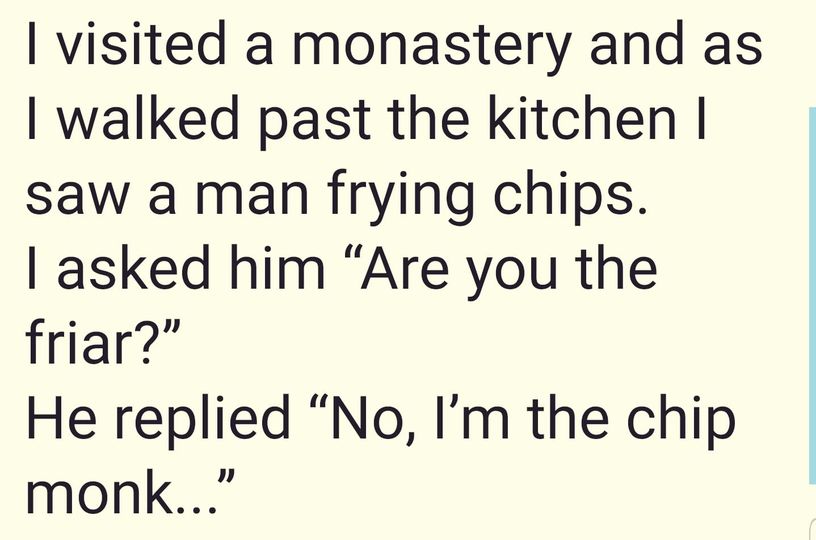
“If only snooze minutes were as long as microwave minutes.”
False Friends Tip of the Week:
Falsche Freunde Tipp der Woche:
German Translation False Friend (F.F.) Meaning of F.F.
Bürger Citizen Burger as in Hamburger
Wit, Wit, Wit Business examples:
Witz, Witz, Witz Geschäftsbeispiele:
“Whilst I have lived in Germany, I have found a marvellous way of stopping telephone salespeople bothering me on the telephone; I just simply ask them if they can speak English and they promptly hang up.”
Quote by Mark Brislin.
Slang word of the day:
Slangwort des Tages:
To be ripped off means to cheat someone, especially financially. To steal or plagiarise something.
Sample Sentence:
“They thought she was ripping them off over their book royalties.”
Colloquial / Colloquialisms:
Umgangssprache / Umgangssprache:
“A doggy bag” is a bag into which leftovers from a meal may be put and taken away, supposedly for the dog’s dinner.
How do you use a doggie bag in a sentence?
“If we went to a restaurant, she would always ask for a doggy bag.”
Sample Sentence:
“A nice, friendly waiter gave us a doggy bag for the bones. Seems she wasn’t hungry though – she left with what looks like a rather fancy doggy bag. Many UK restaurants will now pack any leftover food for you to take home if you ask for a doggy bag.”
Cockney rhyming slang:
Cockney reimender Slang:
“Cock and Hen” = ten.
NOTE: (I do not think, “If push comes to shove“, I would use the short version of this English slang, would you?)
Quote of the week: Zitat der Woche:
“The secret of life is honesty and fair dealing. If you can fake that, you’ve got it made.”
Groucho Marx.

Fortgeschrittene, Anfänger, Geschäftsenglisch, Firmenkurse, Gruppenunterricht, Inhouse-Englisch, Sprachschule Englisch, Telefonkonferenz Englisch persönlich oder per Videokonferenz; in Dresden, Chemnitz, Freiberg, Halsbrücke, Lichtenberg, Brand-Erbisdorf, Meißen, Döbeln, Riesa und überall in Sachsen seit über 20 Jahren!
Delivering professional Business English teaching in person or via video conferencing in Dresden, Chemnitz, Meißen, Lichtenberg, Freiberg, Döbeln, Riesa, Halsbrücke, Brand-Erbisdorf and all over the state of Sachsen for over 20 years!

Recent Comments