To up the ante
by Mark Brislin | Sep 1, 2025 | 2025, Allgemein, Britisches Englisch / Amerikanisches Englisch Wortschatz, Falsche Freunde Tipp der Woche, Geschäftsenglisch, Rechtsenglisch, Satz des Tages, Spezieller Grammatik Tipp der Woche, Umgangssprache, Wort des Tages, Wortschatz für Verträge und Verhandlungen

NOTE: Business English etc.
can be found below the translation exercises.
Translate the Text into English: Übersetzen:
Susann, Andreas, Nadine, Heike, Reiner, and Simone.
Hast du Verwandte in Frankreich?
Ich besuche meine Oma im Februar.
Meine Familie macht immer im August ein Picknick.
Meine Familie macht im Februar eine Party.
Sie besucht ihre Verwandten jedes Jahr.
Warum besuchst du deinen Bruder im Februar?
Wir besuchen meine Eltern vielleicht im August.
Besuchst du deine Verwandten jedes Jahr?
Hurra, du besuchst mich nächsten Juli!
Wir können vielleicht nächsten Sommer Wien besuchen.
*********************************************************
English – English – English – English – English – English – English
Business English Word of the Week:
Geschäftsenglisch Wort der Woche:
A business word/phrase = Proprietor
The owner of a property or business.
Sample Sentence:
“The proprietor is very much hoping to sell the restaurant and then retire.”
Law English Word of the Week:
Gesetz englisches Wort der Woche:
A law word/phrase = “To set a precedent” – einen Präzedenzfall zu schaffen
Sample Sentence:
“When the person who won a court battle against a tobacco company for getting lung cancer as a result of smoking the company’s cigarettes, this set a precedent in the legal world.”
Vocabulary for Contracts:
Wortschatz für Verträge:
CONTRACT TERMS:
Specificity:
They deal with unique aspects of the agreement, providing detailed guidance on how things will be handled.
Sample Sentence:
“It must be clearly specified as to the quality and type of materials to be employed in the construction of this project.”
Vocabulary for Negotiations:
Wortschatz für Verhandlungen:
A word/phrase for negotiations = To up the ante
The phrase of ante means to increase what is at stake or under discussion, especially in a conflict or dispute.
Sample Sentence:
“They all decided to up the ante in the trade war that President Trump had started.”
English – English – English – English – English – English – English
*****************************************************

Word of the day: Wort des Tages:
To exacerbate – verschlimmern
Means to make matters worse. To “exacerbate the situation” means to make a bad or already problematic situation even worse. It’s a formal verb that describes intensifying a problem, conflict, or difficult condition, similar to using words like “aggravate,” “worsen,” or “intensify“.
Sample Sentences:
For example:
“When there are any angry comments during a negotiation, this can exacerbate tensions, making the situation even more difficult.”
“Lack of sleep can exacerbate any existing medical condition.”
“If you ignore a leaking pipe, then this will only exacerbate the water damage.”
Phrase of the day: Satz des Tages:
A bookworm – Bücherwurm
The word “bookworm” refers to someone who loves to read and spends a lot of time doing so, often to the point of being unusually devoted to books. While the term originated as somewhat derogatory, it is now generally considered a neutral or positive descriptor for a person who enjoys reading and studying, though it can sometimes still carry a connotation of being overly absorbed in academic or formal matters.
Key aspects of the “bookworm“:
Primary meaning: A person with a strong love for reading and books.
Behaviour: They spend significant time with books, reading, and studying.
Connotation: The term can be used both neutrally and positively by book lovers, but it can also be used to make fun of someone who reads too much or is perceived as less interested in social activities.
Origin: The term likely originated from the idea of actual bookworms (insects) that infest and consume books, with a person who spends so much time with books being seen as similar to the insect.
Sample Sentences:
“I am a bookworm; I often feel that I have too many books on my bookshelves, and that I have too little time to read all of them.”
“She has always been a bookworm, even starting from when she was a kid”.
Idiom of the day: Redewendung des Tages:
“To be born on the wrong side of the blanket” is a dated British English idiom that means to be born out of wedlock, or to be illegitimate. The phrase denotes a child born to parents who were not married at the time of their birth, often due to an adulterous relationship.
Illegitimacy:
The core meaning of the phrase is illegitimacy, a term used historically to describe children not born within a legal marriage.
Out of wedlock:
This refers to the parents not being married at the time of the child’s birth.
A Dated Term:
The phrase is old-fashioned and recorded from the late 18th century, according to The Oxford Dictionary of Phrase and Fable.
Adulterous Relationship:
The phrase can also refer to a child born through an adulterous relationship, meaning a child born to a married person and someone other than their spouse.
Sample Sentence:
“Interestingly enough, I was born on the wrong side of the blanket. I thank my ‘birth mother’ that I was even born at all, because too many people take the so-called ‘easy way out’ and have their child murdered – some people call it abortion….”
British English / American English Vocabulary:
Britisches Englisch / Amerikanisches Englisch Wortschatz:
British English (B.E.) = cinema (das Kino)
American English (A.E.) = movie house / theatre
Special Grammar Tip of the Week:
Spezieller Grammatik-Tipp der Woche:
Do not use these verbs in the present continuous (I am -ing):
For example: Want, like, love, hate, need, prefer, depend, understand, believe, remember, forget.
Pronunciation Tip: Aussprachetipp:
J = Yacht
The pronunciation of the word ‘Yacht’ is made in the same way a German person will pronounce the letter ‘J’ in German.
JOKES/PUNS:
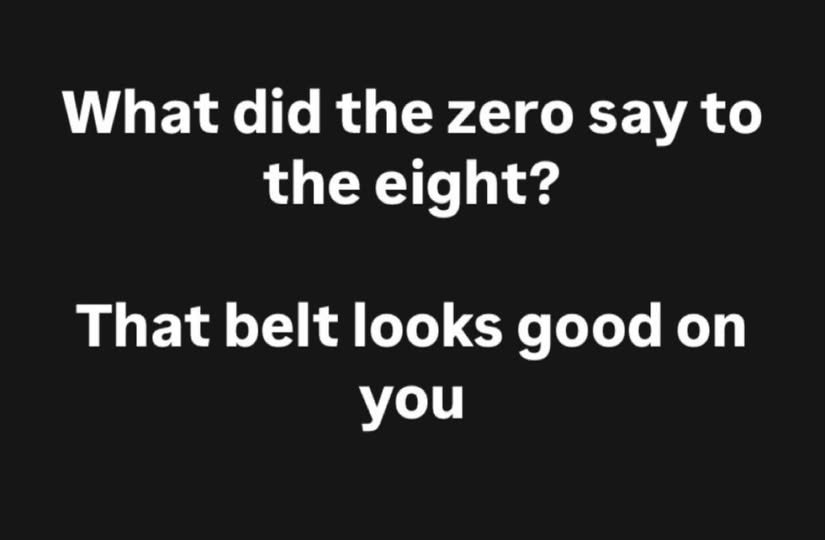
I found a coin with bite marks all over it. It was a Bitcoin.
False Friends Tip of the Week:
Falsche Freunde Tipp der Woche:
German = Schreibtisch, Kommode
Translation = bureau
False Friend (F.F.) = Büro
Meaning of F.F. = bureau (in French) (Office B.E.)
NOTE: = true friend (FBI = Federal Bureau of Investigation).
NOTE: My Grandfather made a bureau himself. This was a writing desk.
******************************************************
English – English – English – English – English – English – English
Wit, wit, wit – Education:
Witz, Witz, Witz – Ausbildung:
“Lack of education is an extraordinary handicap when one is being offensive.”
Quote by Josephine Tey.
******************************************************
English – English – English – English – English – English – English
Slang word of the day:
Slangwort des Tages:
“Don’t get in a Tiswas!” “Don’t get in a Flap!” Nicht in Aufregung geraten.
Sample Sentence:
“Oh my dear girl, don’t get in a Flap! It’s not that Royalty are coming for dinner; it’s only your boss and his wife.”
Colloquial / Colloquialisms:
Umgangssprache / Umgangssprache:
Bagsy – meaning “it’s mine”; succeed in securing (something) for oneself.
Sample Sentence:
“I Bagsy that large cream cake!”
Cockney Rhyming Slang:
Cockney Reimender Slang:
Bag/bags – a £1,000 from ‘bag of sand‘ = ‘a grand’ (meaning one thousand) from recent Cockney rhyming slang.
Quote of the week: Zitat der Woche:
What do you do? I am part of a Global Enterprise.
What do you do? I said, “Well… I work for a Global Enterprise. We’ve got outlets in nearly every country in the world. We’ve got hospitals and hostels and homeless shelters. We’ve got orphanages. We do justice work, and we do reconciliation work. We do Educational work, and we do marriage work. Basically, we look after people from birth to death, and we deal in the area of behavioural alteration. It’s called “The Church”. Have you heard of it?
JJohn

*********************************************************
English – English – English – English – English – English – English
Fortgeschrittene, Anfänger, Geschäftsenglisch, Firmenkurse, Gruppenunterricht, Inhouse-Englisch, Sprachschule Englisch, Telefonkonferenz Englisch persönlich oder per Videokonferenz; in Dresden, Chemnitz, Freiberg, Halsbrücke, Lichtenberg, Brand-Erbisdorf, Meißen, Döbeln, Riesa und überall in Sachsen seit über 20 Jahren!
Delivering professional Business English teaching in person or via video conferencing in Dresden, Chemnitz, Meißen, Lichtenberg, Freiberg, Döbeln, Riesa, Halsbrücke, Brand-Erbisdorf and all over the state of Sachsen for over 20 years!

Recent Comments